The Room Details Seasoned Travelers Always Check (That Most People Completely Ignore)
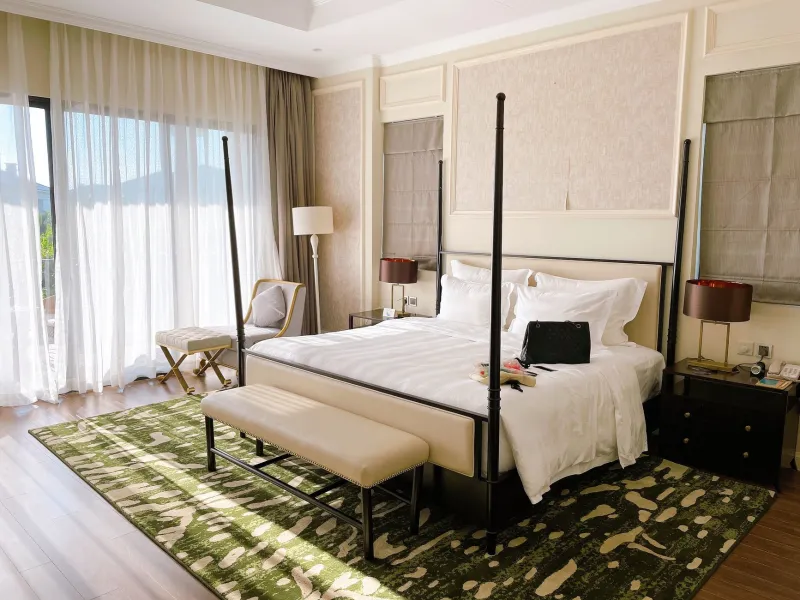
Most of us book a room the same way: filter by price, glance at the star rating, scroll through a handful of photos, and hit confirm. It feels like enough. But if you've ever arrived at a "4-star" property only to spend three nights listening to elevator machinery hum through the wall, you already know that the official metrics don't tell the whole story.
The travelers who consistently have better trips aren't just luckier—they're looking at different things. They've learned to read between the lines of a listing, spot the details that photos conveniently leave out, and ask the right questions before they ever hand over a credit card. Here's what they actually prioritize.
Natural Light: The Underrated Mood Booster
This one sounds almost too simple, but the amount of natural light a room gets has a measurable effect on how you feel during your stay. A dim, north-facing room with one small window might be fine for a single overnight, but spend four or five days in there and you'll notice a dull, low-energy feeling creeping in—especially if you're working remotely or recovering from jet lag.
When you're browsing listings, look at the photos taken during the day with no artificial lighting. Are they still bright? Check whether the listing mentions which direction the room faces. East-facing rooms get gorgeous morning light; west-facing ones are better for late risers. South-facing rooms in the US tend to be the sunniest overall. If the listing doesn't mention it, it's absolutely worth a quick message to the host or front desk before booking.
Noise Isolation: What the Reviews Are Actually Telling You
Review sections are gold mines for noise information—if you know how to read them. Nobody writes "great noise isolation" in a positive review because silence is expected. But scroll to the three-star reviews and you'll often find the real story: "Street noise was brutal on weekends," "Could hear every conversation from the hallway," or "The HVAC unit rattled all night."
For urban stays especially, room position matters enormously. Rooms facing a main street will almost always be louder than interior-facing ones, even in the same building. Higher floors often (but not always) reduce street-level noise. Corner rooms can be a mixed bag—more windows, but sometimes more exposure to multiple noise sources.
If you're a light sleeper or planning to stay somewhere in a busy neighborhood like Midtown Manhattan, the French Quarter in New Orleans, or downtown Nashville, noise isolation should be near the top of your checklist—not an afterthought.
Workspace Functionality: A Deal-Breaker for Remote Workers (and Anyone Who Checks Email)
Hotel desks are often decorative. There's a flat surface, sure, but is it actually positioned near an outlet? Does the chair adjust, or is it a rigid accent chair that'll wreck your back in 45 minutes? Is the Wi-Fi signal strong in that corner of the room, or does it drop out because the router is on the opposite side of the building?
If you're traveling for work or planning to do any amount of laptop time, look for listings that specifically mention a dedicated workspace or ergonomic setup. Some boutique properties and extended-stay hotels have invested seriously in this area—standing desks, monitor hookups, strong in-room Wi-Fi with actual documented speeds. Those details are worth paying a little extra for.
On RoomBST, you can often filter reviews by traveler type. "Business traveler" reviews are particularly useful here because they'll call out workspace issues that leisure travelers might not even notice.
Bathroom Ventilation: Unglamorous but Critical
Nobody talks about this one, and that's exactly why it's worth bringing up. A bathroom without proper ventilation—a functioning exhaust fan or a window that actually opens—creates a whole cascade of unpleasant problems: lingering humidity, foggy mirrors that take forever to clear, and that musty smell that tends to seep into the whole room after a few days.
In older properties especially, ventilation can be hit or miss. It's one of those things that's nearly impossible to gauge from listing photos, so if you're staying somewhere for more than two or three nights, it's worth asking about directly. "Does the bathroom have an exhaust fan or window?" is a completely reasonable question, and any host worth their salt will answer it without blinking.
Storage and Layout: The Practical Stuff That Actually Affects Daily Life
Here's a scenario: you've booked a beautiful room with stunning views, but there's nowhere to put your suitcase except the floor, the closet has four hangers, and the only surface for toiletries is a tiny ledge above the sink. After two days of living out of a half-unpacked bag, the view stops mattering as much.
Room layout and storage capacity are especially important for longer stays and for anyone traveling with more than a carry-on. Look for photos that show the closet area, the bathroom counter space, and whether there's a luggage rack. For families or couples sharing a room, check whether there's enough drawer space for two people to actually unpack.
Smaller boutique hotels and vacation rentals often do this better than large chain properties, simply because they've thought more carefully about how guests actually live in the space day-to-day.
Temperature Control: More Complicated Than It Should Be
Nothing disrupts sleep quite like a room you can't get to the right temperature. And unfortunately, temperature control varies wildly between properties. Some older hotels still use central HVAC systems where guests have very limited control over individual room climate. Others have in-room thermostats that technically work but respond about as quickly as a government form.
If you run hot or cold, or if you're traveling somewhere with dramatic temperature swings (hello, desert Southwest in spring), check the reviews for any mentions of heating or cooling issues. Phrases like "couldn't get the room cool enough" or "thermostat didn't really work" are red flags worth taking seriously.
The Takeaway: Look Beyond the Star Rating
Star ratings measure things like lobby quality, room size, and service standards. They don't measure how well you'll actually sleep, how productive you'll be, or how comfortable you'll feel after five days in that space. The travelers who get the most out of every trip have learned to look past the headline metrics and dig into the specific, unglamorous details that actually determine daily comfort.
Next time you're browsing listings on RoomBST, spend an extra ten minutes reading the mid-range reviews, zooming into the room photos, and asking a quick question or two before you book. That small investment of time pays dividends every single day of your trip.